
What the room in Sherbrooke taught us
A live test in Sherbrooke: 6 organizations out of 14 face a course more demanding than their preparation. What the Progrès morning taught us.
 Robert Vandenbegine · 3 min read
- Published on
- Lever discussed
- 6 · Constructive sub-optimality
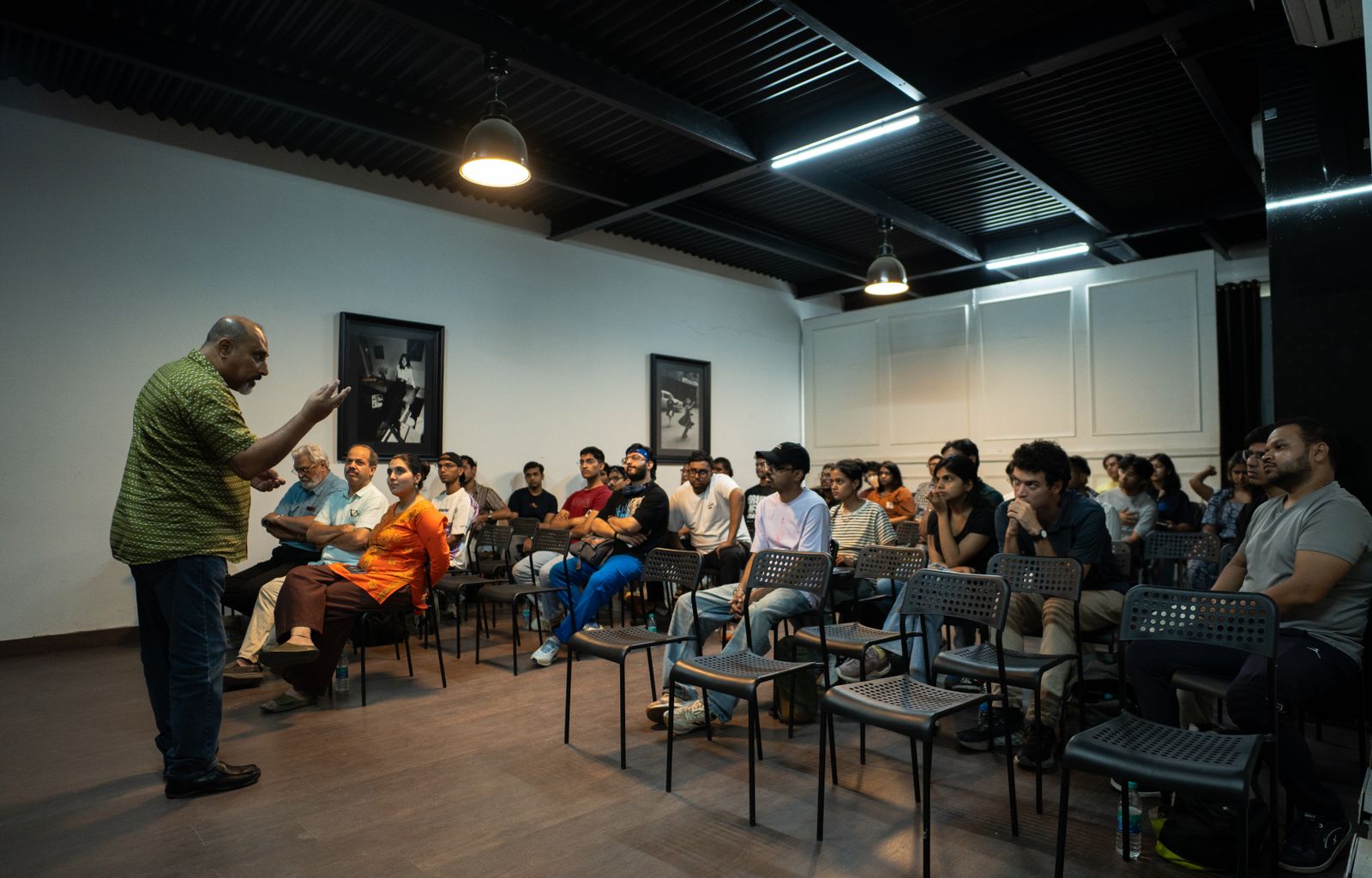
What if progressing didn't necessarily mean doing more? That was the question of the “Progrès” morning, on October 14, 2026 in Sherbrooke, co-organized by Sherbrooke Innovante and the Pôle d'entrepreneuriat collectif de l'Estrie. In the room were people simply curious about robustness, and others already working on it in their organization. Many left with a much clearer idea of the way forward.
Matthieu Piegay, of Niska, led a highly interactive and enlightening presentation, which left plenty of room for exchanges among participants. Late in the morning, we discussed friction at work, especially the friction created by contradictory demands, based on a few cases discussed in full confidence. One of them stayed with me: a mission-driven company wondering whether to keep growing and raising funds, or to look for other ways to last. Deep down, how can it better serve its mission without making itself fragile?
What the screen in the room showed
We also ran a live test, with a Rango tool derived from the FlashScan: each organization placed the course it runs on (track, road, trail or ultra-trail) and what it is prepared for (sprinter, marathoner, trail runner or ultra-trail runner). The results, anonymous, were displayed live.
Of the 14 organizations in the room, from the social economy as well as the private sector:
- 6 face a course more demanding than their preparation, 2 of them much more demanding;
- 6 have a preparation suited to their course;
- 2 have reserves for theirs.
None underestimates its course; several even judge it more demanding than their answers describe it. A small sample, of course, but a signal: the world has tipped into uncertainty, and our ways of operating haven't always kept up. When the course is a notch ahead, you get through, but every unexpected event is paid for in hours, emergencies and energy.
Taking time creates margin
One realization came up often: taking time is not wasted time, it's what creates margin. One example made people smile: the Fondation du Rien, a French art project by the company La Vaste Entreprise, where you sign up for activities that are canceled the same day. What you receive is a free time slot.
In our robustness framework, this is a lever in its own right: constructive sub-optimality. Not optimizing everything, setting aside time and resources that serve no purpose… until the day they serve every purpose.
Thank you to Niska, and to Matthieu for his trust and the quality of his work. Thank you also to Sherbrooke Innovante and the Pôle d'entrepreneuriat collectif de l'Estrie.
And in your organization, when was the last time you blocked off time without planning anything in it? Write to us, we read everything.
This article is also published on LinkedIn (in French), where the discussion continues.