A single part, and everything stops
Hacked refrigeration, PHP flaws, hospitals at a standstill: three shocks of fall 2026, one mechanism. What they say about fragilities, and a fifteen-minute exercise.
 Robert Vandenbegine · 3 min read
- Published on
- Lever discussed
- 5 · Critical independence
In just a few weeks, fall 2026 taught us three lessons.
On October 12, in France, the refrigeration systems of hundreds of supermarkets were hacked remotely. On November 2, the same attack hit stores in nine other European countries, from Belgium to Sweden: food thrown out in large quantities. Several of the affected chains used the same refrigeration control system, from the same manufacturer (AFP, via Noovo).
On October 21, two critical flaws were discovered in PHP, the language that runs nearly 70% of websites. Public websites switched to maintenance mode as a precaution, while the patch was applied (Usine Digitale).
On November 10, in Belgium, a hospital had to shut down its patient records as a precaution. Nothing had failed on its side: its systems ran on the servers of another hospital, which had just lost its network. And it wasn't a cyberattack (La Libre, with Belga).
One mechanism
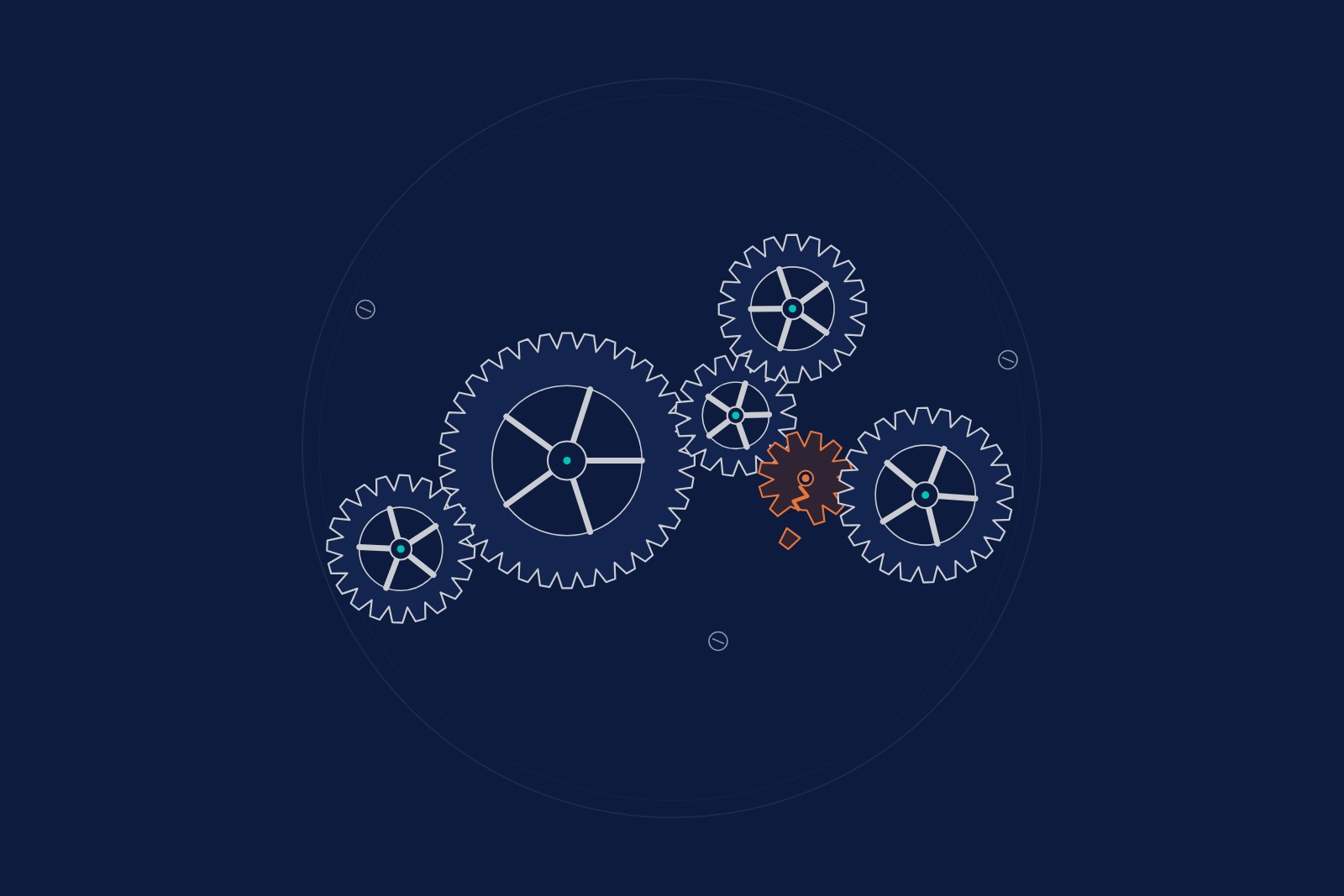
Three different shocks: an attack, a flaw, an outage. One mechanism: a single part on which everything depends, and often at someone else's.
The world isn't becoming more fragile only because shocks are multiplying. It's becoming more fragile because everything is connected.
Sharing servers, entrusting refrigeration to a specialist, building on the language everyone uses: these are good decisions. Cheaper, simpler, more efficient. That's exactly what well-run organizations do. It's also how most fragilities are born. Not through negligence: through optimization. As long as everything holds, they are strengths.
A fragility is not a risk
A risk is an event: we try to predict it, without ever knowing which one will catch us by surprise. A fragility is a point in the organization through which a shock, whatever it may be, would hurt. Attack, flaw or outage: for the organization, the effect is the same. The fragility, on the other hand, can be known today.
A fifteen-minute exercise
To do with your team:
- Name the part whose failure, tonight, would stop everything else: a piece of software, a supplier, a network, a person. Pick just one.
- Ask yourselves who would notice, and when. Detection matters as much as the response.
- Count how many days you would last without it. With your figures: cash, inventory, time to replace it. Keep the smallest.
- Decide on one simple step, with a name and a date, before the end of the month: a manual procedure, a second supplier contacted, a backup tested, a second person trained.
This isn't a business continuity plan. It's a first step, and it's often the one that's missing. You don't eliminate every fragility: some can be reduced, others offset, others accepted knowingly. But you can only choose well what you have named.
And in your organization, which part would stop everything?
This article is also published on LinkedIn (in French), where the discussion continues.