Performance drives growth. Robustness makes it last.
Your indicators tell you how your organization is doing, not where it is fragile: what would turn a shock into a hard blow. Reducing those fragilities helps you absorb, hold, adjust, transform, and learn.
Free questionnaire (FlashScan) · 5 minutes · No sign-up · Instant result
The numbers look good. And yet, you sleep badly.
Nobody lacks talent or drive. But an organization tuned for performance alone, with no margin, becomes fragile as soon as its operating context changes.
One customer, prime contractor, or funder makes up 40% of your revenue. Reassuring, until the day they change strategy.
One person knows everything and has no backup. If they left tomorrow, who would take over on Monday morning?
A part, a piece of software, or a source of funding comes from a single supplier. The day it fails, everything stops.
Your teams keep doing more, and wear themselves out despite the new tools.
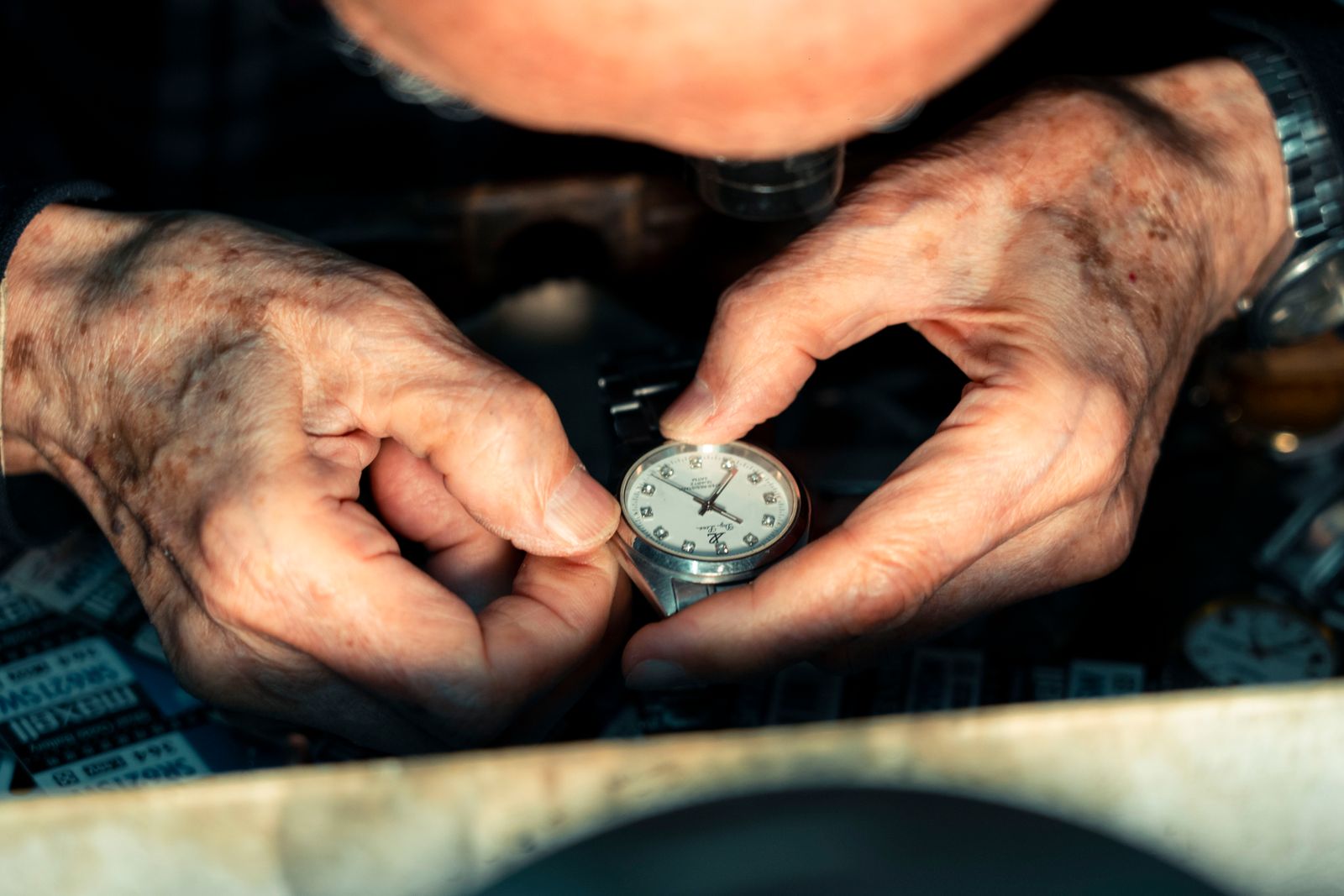
A margin is not waste.
Robustness is an organization's ability to keep functioning, and to remain itself, when conditions stop being normal.
Like a watch's power reserve: you don't see it, and it is what keeps the movement going.
A window, not a targetToo little margin exposes you, too much weighs you down. We reduce the fragilities that matter to you.
From vague worry to a clear plan.
First, a way in: the FlashScan, a first reading in 5 minutes, then a 20-minute conversation to see together, on both sides, whether the process makes sense, now or later. Then we measure, act, and measure again.
Assess
A few meetings with your advisor to carry out the assessment; in between, you complete some of the tools yourself.
Understand
Your advisor presents the Robustness Review to you and leads the discussion with your team.
Improve
Choose a few levers, not twelve: concrete actions, milestones, simple indicators.
Transform
A process in workshops and online: you move forward in your space, and your advisor follows your progress.
Measure and readjust
Measure the first results, then redo the assessment: compare before and after. The loop starts again.
At each step, you can stop or postpone.
What you get
Rango is not an audit and does not hand down a verdict. It is a process, led with an advisor on an online platform, that starts from your answers and your figures to help you decide where to start.
A clear reading
Where your organization is solid, where it is exposed, based on your answers: no jargon, no labels.
Your figures
The cost of your fragilities and your value leaks, calculated with your own data.
A plan that fits you
A few priority levers, concrete actions, and simple indicators to track progress.
Reports to share
To show your team, your board, or your funders, without editing them.
A space that remembers
Your choices, your reports, and your progress stay in your space, between workshops and after.
An advisor by your side
A professional who knows Rango's framework, leads the workshops, and helps you decide.
Your answers remain yours: they are used for sector benchmarks only in anonymized form.
A neutral reading
A common language for the whole organization: reports you can show your team, your board, or your funders without editing them.
- An index, not a verdict
- An organization is not “fragile” or “solid”: it is more or less exposed. We name fragilities without judging the organization.
- Based on your answers
- A questionnaire measures a perception, and our results say so.
- Margins are an asset
- A margin is not waste; it is insurance for continuity.
- A window, not a target
- No number to maximize. A viability window is a zone where the organization holds: too little margin exposes it, too much margin weighs it down.
Robustness as a strategic advantage
Why performance alone is no longer enough: the data, the 12 levers of robustness, and what organizations can do right now to prepare for the shocks ahead. The document is in French.
- ≈30%
of large companies' long-term relative stock market return is decided during crises, which account for only 11% of the time.BCG Henderson Institute, Becoming an All-Weather Company, 2020
- 99.8%
of Quebec businesses with employees are small and medium-sized businesses (fewer than 500 employees).Institut de la statistique du Québec, 2019
- 9%
of SMB owners have a formal succession plan, while 76% plan to leave their business within 10 years.CFIB, Un tsunami de successions, 2022
What we see in organizations
All articlesWhen everything stops, the other route
A global Outlook and Teams outage: a uniform system has a common weak point. What the outage teaches us, and why to spot your fragilities while things are calm.
A single part, and everything stops
Hacked refrigeration, PHP flaws, hospitals at a standstill: three shocks of fall 2026, one mechanism. What they say about fragilities, and a fifteen-minute exercise.
Innovating to last
Innovation drives growth, as the Grande Enquête 2026 by the Conseil de l'innovation du Québec shows. But it can also create dependencies. Five questions.
A first reading, in five minutes.
You fill out the FlashScan on your own, with no sign-up: a picture from a distance, not a diagnosis. To know where to start, a 20-minute conversation lets us read it together.